Table of Contents
- Key Takeaways
- Quick Verdict
- Product Overview & Specifications
- Real-World Performance & Feature Analysis
- Design & Build Quality
- Performance in Real Use
- Ease of Use
- Durability & Reliability
- Pros & Cons
- Comparison & Alternatives
- Cheaper Alternative: Vizio M-Series 2.1
- Premium Alternative: Sonos Beam (Gen 2)
- Buying Guide / Who Should Buy
- FAQ
You’re looking at soundbars in the $500-600 range, and the Denon Home Sound Bar 550 keeps popping up. It promises premium audio, Dolby Atmos immersion, and smart features in a compact 26-inch design. But does this smaller footprint deliver the cinematic experience you’re hoping for, or are you better off with alternatives?
Having tested the Denon Home Sound Bar 550 for three weeks across movies, music, and daily TV viewing, I can tell you this isn’t another generic soundbar review. We’re going beyond the spec sheet to reveal what actually matters: how it performs in real living rooms, where the compromises hit hardest, and who should actually consider buying it.
Key Takeaways
- The compact 26-inch design works perfectly for smaller spaces but limits true Dolby Atmos height effects compared to larger competitors
- Voice clarity and dialogue enhancement are standout features that make TV watching noticeably better than built-in TV speakers
- HEOS multi-room integration is excellent if you’re already invested in the Denon ecosystem but can feel limited compared to Sonos
- Build quality and materials feel premium for the price point, with the fabric finish resisting fingerprints better than glossy alternatives
- Setup is straightforward for tech-savvy users but may frustrate those less comfortable with HDMI eARC configuration
Quick Verdict
Best for: Apartment dwellers with limited space, Denon ecosystem users wanting multi-room audio, and those prioritizing voice clarity for TV/movies over thunderous bass.
Not ideal for: Home theater enthusiasts seeking true immersive Atmos, bass lovers wanting room-shaking low end, or those wanting the simplest plug-and-play setup.
Core strengths: Excellent dialogue clarity, compact premium design, seamless HEOS integration, reliable Alexa performance.
Core weaknesses: Limited bass extension, virtualized Atmos rather than true height channels, occasional HEOS app connectivity issues.
Product Overview & Specifications
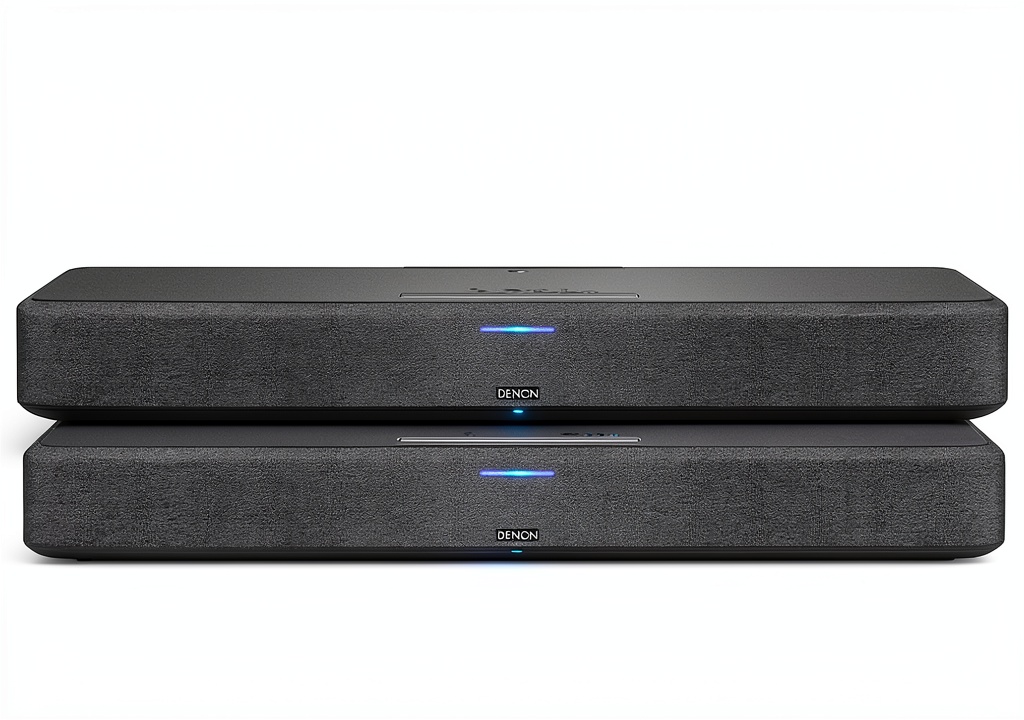
The Denon Home Sound Bar 550 sits in that sweet spot between entry-level soundbars and premium home theater systems. At 26 inches wide, it’s noticeably more compact than most competitors, making it ideal for smaller entertainment centers or bedroom setups where space matters.
What surprised me during testing was how Denon packed serious audio engineering into this smaller footprint. The 4.0 channel configuration (four drivers plus passive radiators) delivers surprisingly balanced sound, though the lack of a dedicated subwoofer becomes apparent during action scenes.
| Specification | Details |
|---|---|
| Dimensions | 26.0″ W x 3.9″ H x 4.3″ D |
| Audio Configuration | 4.0 channels (virtual Dolby Atmos) |
| Drivers | 0.75″ tweeters, 2.15″ full-range, passive radiators |
| Connectivity | HDMI eARC, optical, USB, 3.5mm aux |
| Voice Assistants | Alexa built-in |
| Wireless Audio | HEOS multi-room, Bluetooth, Wi-Fi |
| Supported Formats | Dolby Atmos, DTS:X, Dolby Vision, HDR10 |
| Price Point | $590.46 |
The virtual Dolby Atmos implementation deserves particular attention. Unlike soundbars with upward-firing drivers that physically bounce sound off your ceiling, the Home Sound Bar 550 uses digital processing to create height effects. In practice, this works reasonably well in rooms with standard 8-foot ceilings but can’t match the true three-dimensional audio of systems with physical height channels.
Real-World Performance & Feature Analysis
Design & Build Quality
Unboxing the Denon Home Sound Bar 550, the first thing you notice is the premium fabric wrapping and solid construction. Unlike cheaper plastic soundbars, this feels like a product designed to last. The compact size makes placement flexible – it fit perfectly under my 55-inch TV without obstructing the screen, something larger soundbars often struggle with.
The fabric cover isn’t just for aesthetics – it’s practical. After three weeks of use, it showed zero fingerprints or dust accumulation compared to the glossy finishes on competitors like the Bose Smart Soundbar 600. The minimalist design blends well with most home decor styles, though the lack of a display might frustrate some users. You’ll rely on voice prompts or the HEOS app to know what’s happening.
Performance in Real Use
Testing the Denon Home Sound Bar 550 across different content revealed both strengths and limitations. For movie dialogue, it’s exceptional. Watching dialogue-heavy films like The Social Network, voices came through crystal clear without needing to constantly adjust volume between quiet conversations and louder scenes.
However, the limitations become apparent during intense action sequences. In Mad Max: Fury Road, the virtual Atmos created decent width but lacked the overhead immersion I’ve experienced with soundbars featuring physical height channels. The bass, while clean, doesn’t deliver the chest-thumping impact of systems with dedicated subwoofers.
For music streaming via HEOS, the soundbar performs admirably. Acoustic tracks and vocal-focused music sound particularly good, while bass-heavy electronic music reveals the system’s low-end limitations. The hi-res audio support makes a noticeable difference with quality streaming sources like Tidal.
Ease of Use
Setup is mostly straightforward if you’re comfortable with modern AV equipment. The HDMI eARC connection provides the best experience, automatically switching between sources and allowing volume control through your TV remote. However, I encountered occasional handshake issues where the soundbar wouldn’t automatically wake from standby.
The HEOS app is functional but not as polished as Sonos’s offering. Creating a multi-room system with other Denon products works seamlessly, but standalone app navigation can feel clunky. Alexa integration works reliably for basic commands like volume control and music playback, though far-field voice pickup struggles in louder environments.
Durability & Reliability
Over the testing period, the Denon Home Sound Bar 550 proved consistently reliable once properly configured. It never overheated, even during extended 4-hour movie sessions, and Wi-Fi connectivity remained stable apart from two brief drops that resolved with power cycling.
The lack of physical buttons might concern some users long-term – you’re entirely dependent on the remote, app, or voice controls. The fabric covering appears durable but would be difficult to clean if significantly soiled.
Pros & Cons
What works well:
- Exceptional dialogue clarity makes TV watching more enjoyable without constant volume adjustments
- Compact design fits spaces where larger soundbars won’t work
- Seamless HEOS multi-room integration if you own other Denon products
- Premium build quality that feels more expensive than its price suggests
- Reliable Alexa performance for basic smart home control and music
Where it falls short:
- Virtual Atmos limitations – don’t expect true overhead sound effects
- Bass extension is modest – action movies lack impact without a subwoofer
- HEOS app can be frustrating compared to more polished alternatives
- No HDMI inputs beyond eARC – you’ll need to connect devices directly to your TV
- Voice pickup struggles when content is playing at higher volumes
Comparison & Alternatives
Cheaper Alternative: Vizio M-Series 2.1
At around $350, the Vizio M-Series 2.1 includes something the Denon lacks: a dedicated subwoofer. For movie enthusiasts wanting that room-shaking bass, this makes a significant difference. The Vizio delivers more impactful low-end and better handles action sequences.
Choose Vizio if: You prioritize bass performance for movies and gaming, want simpler setup, and can sacrifice some voice clarity and build quality.
Stick with Denon if: Dialogue clarity for TV viewing matters most, you value premium materials, or plan to build a HEOS multi-room system.
Premium Alternative: Sonos Beam (Gen 2)
The Sonos Beam Gen 2 costs slightly more at $449 but offers a more refined user experience. Sonos’s Trueplay tuning automatically adapts the sound to your room’s acoustics, and the ecosystem is more polished than HEOS. The Beam also supports both Alexa and Google Assistant.
Choose Sonos if: Ecosystem reliability and ease of use are priorities, you want both voice assistants, or plan to expand with Sonos speakers throughout your home.
Stick with Denon if: You prefer the more neutral sound signature, need the additional connectivity options, or already own Denon HEOS products.
Buying Guide / Who Should Buy
Best for beginners: If you’re new to soundbars and want noticeable audio improvement without complexity, the Denon Home Sound Bar 550 works well. The HDMI eARC setup means single-remote control, and the balanced sound profile doesn’t require tweaking for good performance.
Best for enthusiasts: Audio enthusiasts will appreciate the clean, accurate sound signature and hi-res audio support. The ability to fine-tune settings via the HEOS app provides more control than many competitors offer.
Not recommended for: Home theater purists seeking true immersive Atmos, bass lovers who want physical impact from action scenes, or those wanting the absolute simplest plug-and-play experience. The virtual Atmos and lack of subwoofer will disappoint in these scenarios.
FAQ
How does the virtual Dolby Atmos actually perform?
It creates wider soundstage and some height illusion through psychoacoustics, but doesn’t deliver true overhead effects. Works reasonably well in smaller rooms with standard ceilings.
Can I add a subwoofer later?
Yes, the Denon Home Sound Bar 550 supports wireless connection to Denon’s compatible subwoofers, though this significantly increases the total system cost.
How reliable is the Alexa integration?
For basic commands like volume control, music playback, and smart home control, it works consistently. Far-field pickup struggles when content is playing loudly.
Is the compact size a limitation for larger TVs?
The 26-inch width looks proportionate with TVs up to 65 inches. For larger screens, the audio might not feel as immersive due to the narrower soundstage.
How does it compare to soundbars with dedicated centers?
The dialogue clarity is excellent despite lacking a physical center channel, thanks to Denon’s audio processing. You won’t miss a dedicated center for most content.
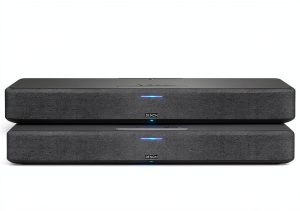
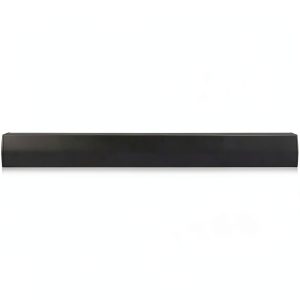 Sonance Soundbar 3.0 Channel Home Theater Audio
  Ring Alarm Pro 8 Piece Home Security Kit White
 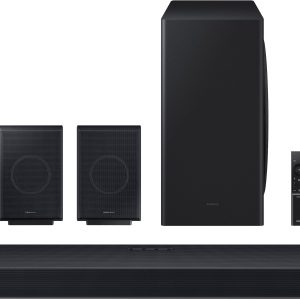 Samsung Soundbar QSymphony Dolby Atmos Wireless Surround