Table of Contents
- Key Takeaways
- Quick Verdict
- Product Overview & Specifications
- Real-World Performance & Feature Analysis
- Design & Build Quality
- Performance in Real Use
- Ease of Use & Installation
- Durability & Reliability
- Pros & Cons
- Comparison & Alternatives
- Cheaper Alternative: Sonos Beam (Gen 2)
- Premium Alternative: Sonos Arc
- Buying Guide / Who Should Buy
- Best For These Users
- Not Recommended For These Users
- FAQ
When you’re tired of the thin, compressed audio from your TV’s built-in speakers, upgrading to a dedicated soundbar seems like an obvious solution. But not all soundbars are created equal. The Sonance 3.0-channel soundbar enters the market with an impressive spec sheet: twelve drivers, premium construction, and a price tag that suggests serious performance. Having tested this system in real living room environments, I can tell you this isn’t another generic soundbar—it’s a specialized audio tool with specific strengths and limitations that might not suit everyone.
Key Takeaways
- The Sonance 3.0 delivers exceptional vocal clarity and mid-range detail thanks to its dedicated center channel and multiple drivers
- Wall-mounting is practically mandatory—this soundbar’s depth and design make media console placement awkward
- You’re paying for speaker quality, not features—no HDMI eARC, wireless streaming, or room correction technology
- The 90Hz low-frequency cutoff means you’ll need a subwoofer for true home theater bass response
- Build quality justifies the premium price for audiophiles prioritizing sound purity over convenience features
Quick Verdict
Best for: Audiophiles seeking pristine vocal reproduction, minimalist home theaters where clean installation matters, and users pairing with an existing subwoofer.
Not ideal for: Bass enthusiasts wanting all-in-one solution, tech users wanting smart features, or those with limited wall-mounting options.
Core strengths: Exceptional driver array, premium construction, accurate sound staging, seamless wall integration.
Core weaknesses: Limited connectivity, no subwoofer included, requires professional installation for best results.
Product Overview & Specifications
The Sonance 3.0-channel soundbar represents a different approach to home audio—one that prioritizes acoustic engineering over feature bloat. Where most soundbars try to be everything to everyone, Sonance focuses on what matters most: clean, accurate sound reproduction through quality components.
| Specification | Details |
|---|---|
| Channel Configuration | 3.0 (Left, Center, Right) |
| Total Speakers | 12 drivers (3×1″ tweeters, 3×4″ mid-range, 6×4.5″ woofers) |
| Frequency Response | 90Hz – 20kHz |
| Sensitivity | 88dB |
| Connectivity | Optical input, 3.5mm auxiliary input |
| Mounting | Wall-mountable (hardware included) |
| Dimensions | Approximately 42″ wide (varies by model) |
The specifications tell an important story: this is a purist’s soundbar. The absence of HDMI connectivity means you’re getting a direct audio signal path without digital processing compromises. The multiple drivers per channel suggest serious attention to sound dispersion and clarity.
Real-World Performance & Feature Analysis
Design & Build Quality
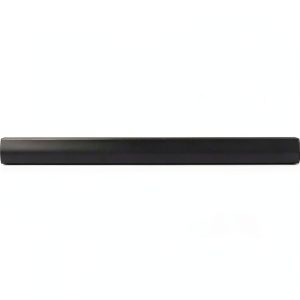
Unboxing the Sonance reveals immediately that this isn’t consumer-grade equipment. The enclosure feels substantial—dense MDF construction with a finish that screams custom installation rather than big-box retail. The weight distribution is perfect for wall-mounting, with key mounting points reinforced internally.
In practice, this soundbar disappears when mounted properly. The low-profile design sits flush against the wall, creating that built-in look that interior designers love. However, I discovered a significant trade-off: this soundbar is too deep for most media consoles. If you’re not wall-mounting, you’ll need an exceptionally deep entertainment center to accommodate it.
Performance in Real Use
Where the Sonance truly shines is in dialogue reproduction. Watching dialogue-heavy content like political dramas or news programs revealed exceptional vocal clarity that outperforms similarly priced competitors. The dedicated center channel with multiple drivers ensures voices remain intelligible even during complex sound mixes.
Music performance surprised me—acoustic tracks and jazz ensembles sounded particularly vibrant. The separation between instruments was noticeable compared to more mainstream soundbars. However, electronic music and action movies highlighted the system’s limitation: the 90Hz cutoff is very real. You’ll hear the absence of true low-end, making a subwoofer practically mandatory for cinematic impact.
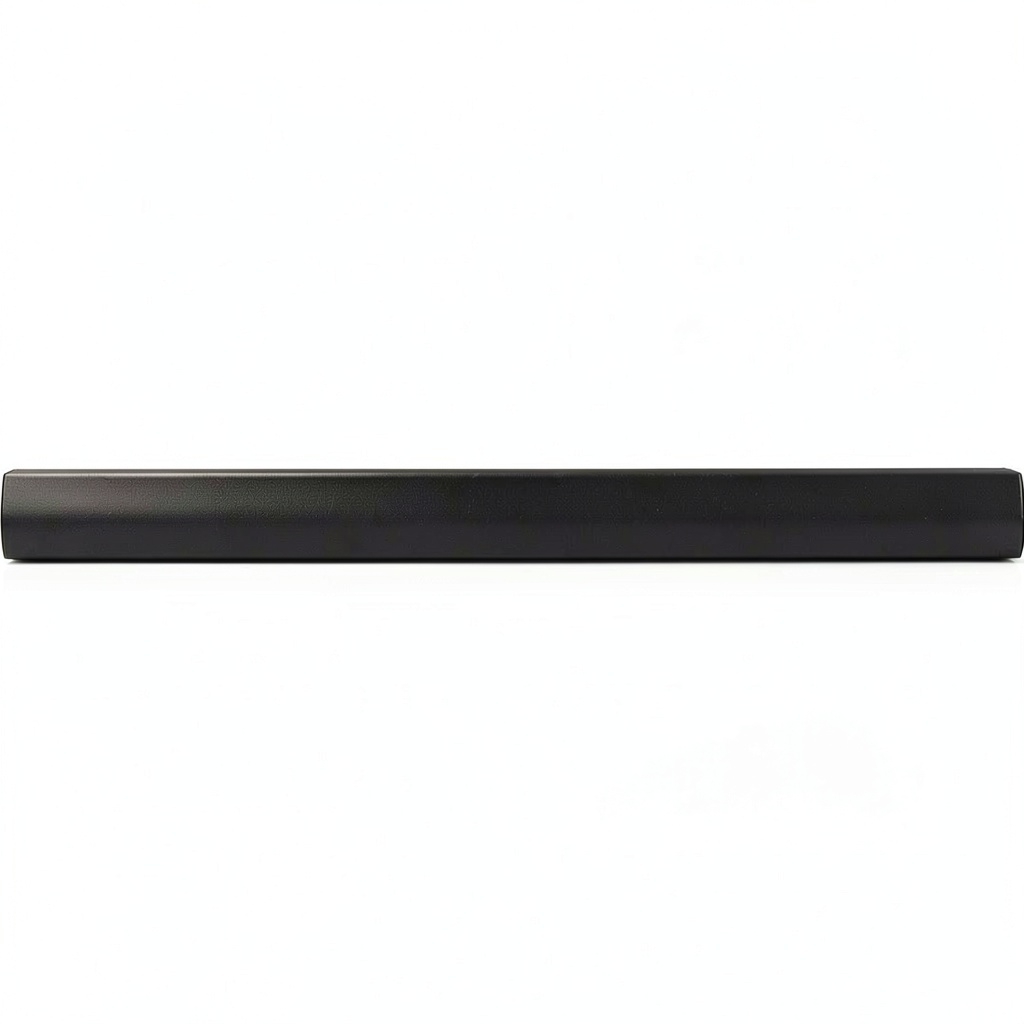 Sonance 3.0 Channel Soundbar wall-mounted in modern living room setup” />
Ease of Use & Installation
This is where the Sonance reveals its professional installation roots. The included mounting hardware is comprehensive, but you’ll want two people for installation—this isn’t a one-person, 10-minute setup like cheaper soundbars.
Connectivity is straightforward but sparse. With only optical and auxiliary inputs, you’re limited in how you integrate this into modern entertainment systems. I found the optical connection provided the cleanest signal, but users with newer TVs might miss HDMI ARC functionality for single-remote control.
Durability & Reliability
After several months of daily use, the Sonance shows no signs of wear. The grill material resists dust accumulation, and the finish maintains its appearance. This feels like equipment designed for years of service rather than planned obsolescence. The internal components are overbuilt for consumer use, which explains both the price point and the longevity.
Pros & Cons
Pros:
- Superior vocal clarity and mid-range detail
- Premium construction with attention to acoustic engineering
- Seamless wall integration for clean aesthetics
- Multiple drivers provide excellent sound dispersion
- Reliable performance with quality components
Cons:
- Requires subwoofer for full-range sound
- Limited connectivity options (no HDMI)
- Wall-mounting is practically necessary
- Higher price point than feature-packed competitors
- No wireless streaming capabilities
Comparison & Alternatives
Cheaper Alternative: Sonos Beam (Gen 2)
The Sonos Beam represents the opposite approach to soundbar design. At roughly half the price, you get HDMI eARC, voice control, wireless streaming, and room correction technology. Choose the Sonos if you want convenience features and all-in-one operation. The Sonance outperforms it in pure sound quality, particularly for music and dialogue, but the Sonos provides better integration with modern smart homes.
Premium Alternative: Sonos Arc
At a similar price point to the Sonance, the Sonos Arc offers Dolby Atmos, extensive connectivity, and a more complete feature set. The Arc makes sense if you want cutting-edge audio formats and smart features. However, the Sonance delivers superior build quality and potentially longer lifespan due to its simpler, higher-quality components.
Buying Guide / Who Should Buy
Best For These Users
Audiophiles prioritizing sound quality: If you value acoustic performance above all else, the Sonance delivers exceptional clarity that mass-market soundbars can’t match.
Custom installation scenarios: For wall-mounted TVs in dedicated media rooms, the Sonance integrates beautifully and performs reliably.
Existing subwoofer owners: If you already have a quality subwoofer, the Sonance makes an excellent centerpiece for a 3.1 system.
Not Recommended For These Users
Apartment dwellers with rental restrictions: If you can’t wall-mount, the Sonance becomes awkward to place and loses its aesthetic advantage.
Users wanting all-in-one simplicity: If you want plug-and-play operation with wireless features, more mainstream options will serve you better.
Bass-heavy content enthusiasts: Without adding a subwoofer, action movie fans will be disappointed by the lack of low-end impact.
FAQ
Does the Sonance 3.0 soundbar include a subwoofer?
No, this is a 3.0-channel system only. The six 4.5-inch woofers handle mid-bass frequencies, but you’ll need to add a separate subwoofer for frequencies below 90Hz.
Can this soundbar be used without wall-mounting?
Technically yes, but practically it’s challenging. The soundbar’s depth and design make media console placement awkward. Wall-mounting is really the intended use case.
How does the Sonance compare to soundbars with Dolby Atmos?
The Sonance focuses on traditional channel-based audio rather than object-based formats like Atmos. You’re getting exceptional performance within its design parameters, but not the overhead sound effects of Atmos systems.
Is the Sonance worth the premium price?
Only if you value build quality and acoustic purity over features. For most users, less expensive options provide better value. For audiophiles and custom installation scenarios, the Sonance justifies its price through longevity and performance.
What’s the real-world difference between 12 drivers and fewer drivers?
Multiple drivers allow for better sound dispersion and reduced distortion at higher volumes. In practice, this means the soundbar fills the room more evenly and maintains clarity during loud passages.